Walk into a shopping center, restaurant, school, office building, or airport, and you'll likely see digital signage in action. From electronic menu boards to large promotional displays, digital signs have become an increasingly common way for businesses and organizations to communicate with their audiences.
But what exactly is digital signage, how does it work, and is it the right choice for your business? Here's what you should know.
Quick takeaway: Digital signage is ideal for messages that change often. Traditional signs remain the foundation for permanent branding, identification, and wayfinding. The most effective strategies use both.
What Is Digital Signage?
Digital signage refers to the use of electronic displays to share information, advertisements, announcements, promotions, and other visual content. Instead of displaying a static message printed on a traditional sign, digital signage uses screens to present content that can be updated electronically.
Common examples include:
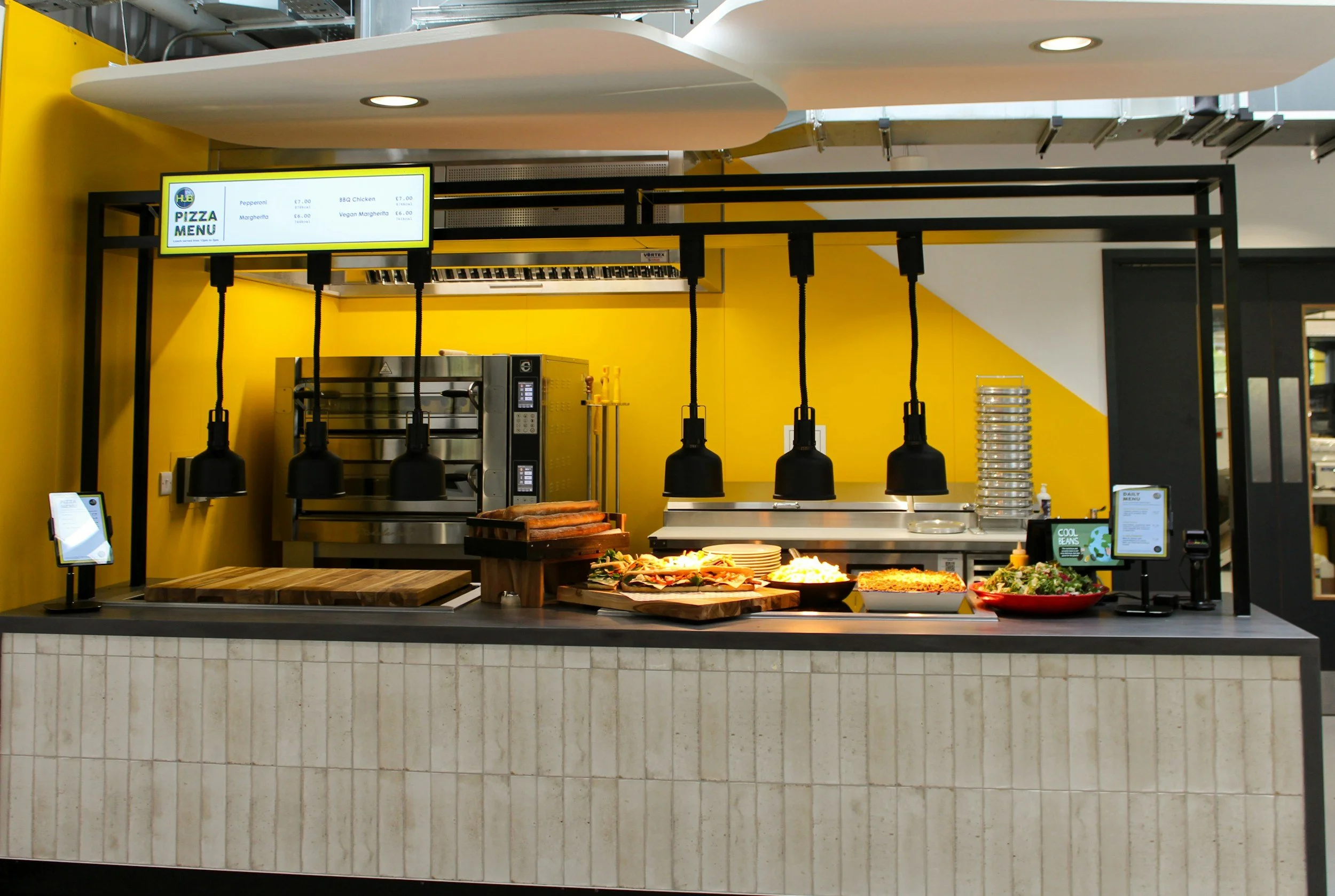
Digital menu boards in restaurants and cafés
Promotional displays in retail stores and shopping centers
Electronic directories in office buildings
Information screens in schools and universities
Event schedules and announcements
Wayfinding displays in hospitals, airports, and large facilities
Digital advertising displays in public spaces
Digital signage can range from a single screen behind a checkout counter to a network of displays throughout a large commercial property.
How Does Digital Signage Work?
Most digital signage systems have three basic components:
1. The Display
This is the screen that people see. Depending on the application, it may be a commercial-grade monitor, LED display, video wall, or outdoor digital sign.
2. The Content
The content might include images, videos, animations, text, menus, advertisements, or real-time information. Businesses can design their own content or work with a professional designer. (Tip: start with high-quality artwork. Our guide on how to vectorize an image for professional signage explains why it matters.)
3. The Content Management System (CMS)
Many digital signage systems use software that allows businesses to manage and schedule content remotely. This makes it possible to update multiple screens without physically replacing printed materials or visiting each display.
For example, a restaurant could update its breakfast menu in the morning, switch to lunch promotions later in the day, and display dinner specials in the evening.
Benefits of Digital Signage for Businesses
Digital signage offers several advantages, particularly for businesses that regularly communicate changing information.
1. Easy Content Updates
One of the biggest advantages is flexibility. Businesses can change promotions, prices, announcements, and other information without printing and installing new signs. This can be especially useful for restaurants, retailers, event venues, and businesses with frequently changing offers.
2. Greater Visual Engagement
Moving images, video, animation, and bright displays can attract attention in busy environments. Digital signage gives businesses more ways to communicate visually than a traditional static sign.
3. Time-Sensitive Promotions
Digital displays can show different content depending on the time of day, season, or promotional schedule. This allows businesses to tailor their messaging to different audiences and situations.
4. Centralized Management
Businesses with multiple locations or displays can often manage their content through one central platform. This helps maintain consistent messaging across different buildings, departments, or storefronts.
5. Real-Time Information
Depending on the system, digital signage can display live information such as weather updates, event schedules, transportation information, or changing inventory and pricing.
Digital Signage vs. Traditional Signs: What's the Difference?
Digital and traditional signs serve many of the same purposes, but they work in different ways:
Content: Digital uses electronic images, video, and text. Traditional uses printed or fabricated graphics.
Updates: Digital is changed electronically. Traditional usually requires new printing or fabrication.
Maintenance: Digital requires power and electronic components. Traditional depends on material and installation.
Initial investment: Digital is often higher. Traditional varies by size and materials.
Ongoing costs: Digital may include software, electricity, and maintenance. Traditional generally has fewer ongoing technology costs.
Best for: Digital suits frequently changing messages. Traditional suits permanent branding, identification, and directions.
Neither option is automatically better. The right choice depends on the purpose of the sign, its location, how frequently the message changes, and the available budget.

When Should a Business Choose Traditional Signage?
Despite the growth of digital displays, traditional signage remains essential for many business applications. A professionally designed physical sign provides a permanent visual presence that works around the clock without requiring electricity or software.
Traditional signs are particularly effective for:
Storefront identification and exterior building signs
Permanent interior branding and wall graphics
For example, a storefront sign should clearly identify a business whether its digital advertising displays are running or not. Similarly, parking signs, building directories, and safety signage need to communicate information consistently and reliably.
Can Digital and Traditional Signage Work Together?
Absolutely. In many cases, the most effective signage strategy combines both.
Retail: A store might use a permanent exterior sign to establish its identity, window graphics to promote its brand, and digital displays inside to advertise seasonal products.
Schools: A school could use traditional directional signs to help visitors navigate the campus while using digital displays for announcements, event schedules, and daily updates.
Shopping centers: A center might combine permanent tenant identification, parking signs, and wayfinding with digital promotional displays.

The goal is to use the right type of signage for each communication need.
What Should You Consider Before Investing in Digital Signage?
Before purchasing a digital display, consider the following:
Location: Will the screen be indoors or outdoors? Outdoor displays need to withstand weather and changing light conditions.
Visibility: What size and brightness will be needed for people to read the content comfortably?
Content: Will you display static images, video, animations, live information, or a combination?
Management: Who will create, schedule, and update the content?
Budget: Consider the display, installation, software, electricity, and ongoing maintenance.
Purpose: Is the goal to advertise, provide directions, share information, or strengthen your brand?
Planning these details in advance can help you avoid investing in a system that doesn't meet your actual needs.
Need Signs for Your Business?
Digital signage is an effective communication tool, but it is only one part of a complete signage strategy. Physical signs remain just as important for establishing your brand, identifying your location, guiding visitors, and communicating information.
At Davis Sign Co., we help businesses, schools, organizations, and property managers throughout the Bay Area, including San Rafael, Marin County, San Francisco, and the East Bay, create custom signage solutions. From storefront signs and dimensional lettering to vehicle graphics, banners, wall graphics, parking signs, and custom decals, we help bring your visual communication projects to life.
Whether you're updating an existing location or planning signage for a new space, our team can help you determine the right physical signage for your needs. See how our process works or browse our recent projects.
Get a Free Quote from Davis Sign Co. →
Davis Sign Co.
1925 Francisco Blvd East, Suite 13
San Rafael, CA 94901
(415) 457-4091
shop@davissignco.com