Sign Materials 101: How to Choose the Right Material for Your Sign
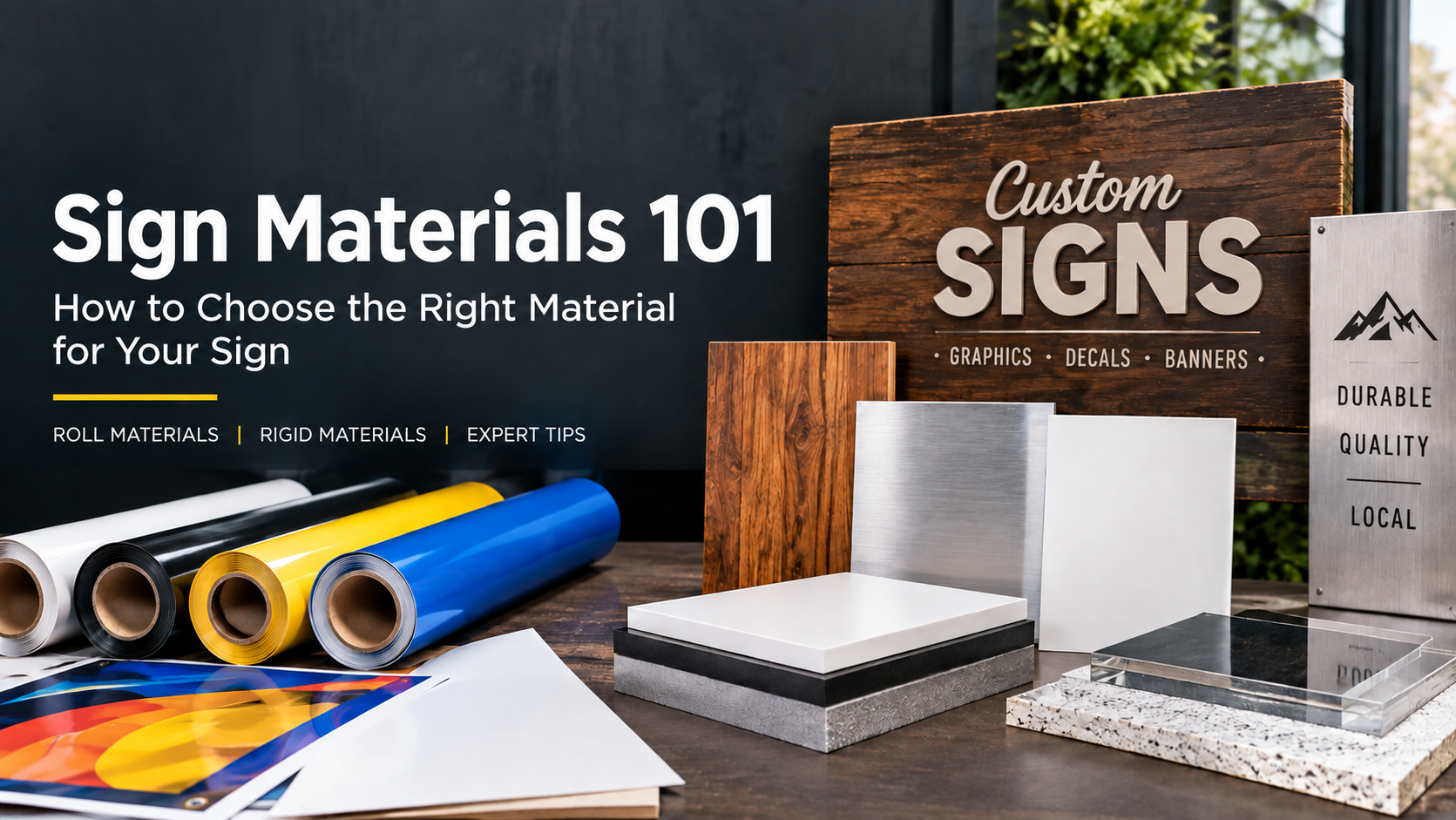
When you're ordering a custom sign, the design is only part of the equation. The material you choose can affect the sign's appearance, durability, cost, weight, and where it can be used.
If you're not familiar with the sign-making industry, the number of material options can be confusing. Should you use vinyl? Aluminum? Wood? A banner? Foam? Plastic?
A useful place to start is by dividing sign materials into two broad categories:
Roll materials and rigid materials.
At Davis Sign Co., we work with a wide range of materials and can help determine which option makes sense for your project.
What Are Roll Materials?
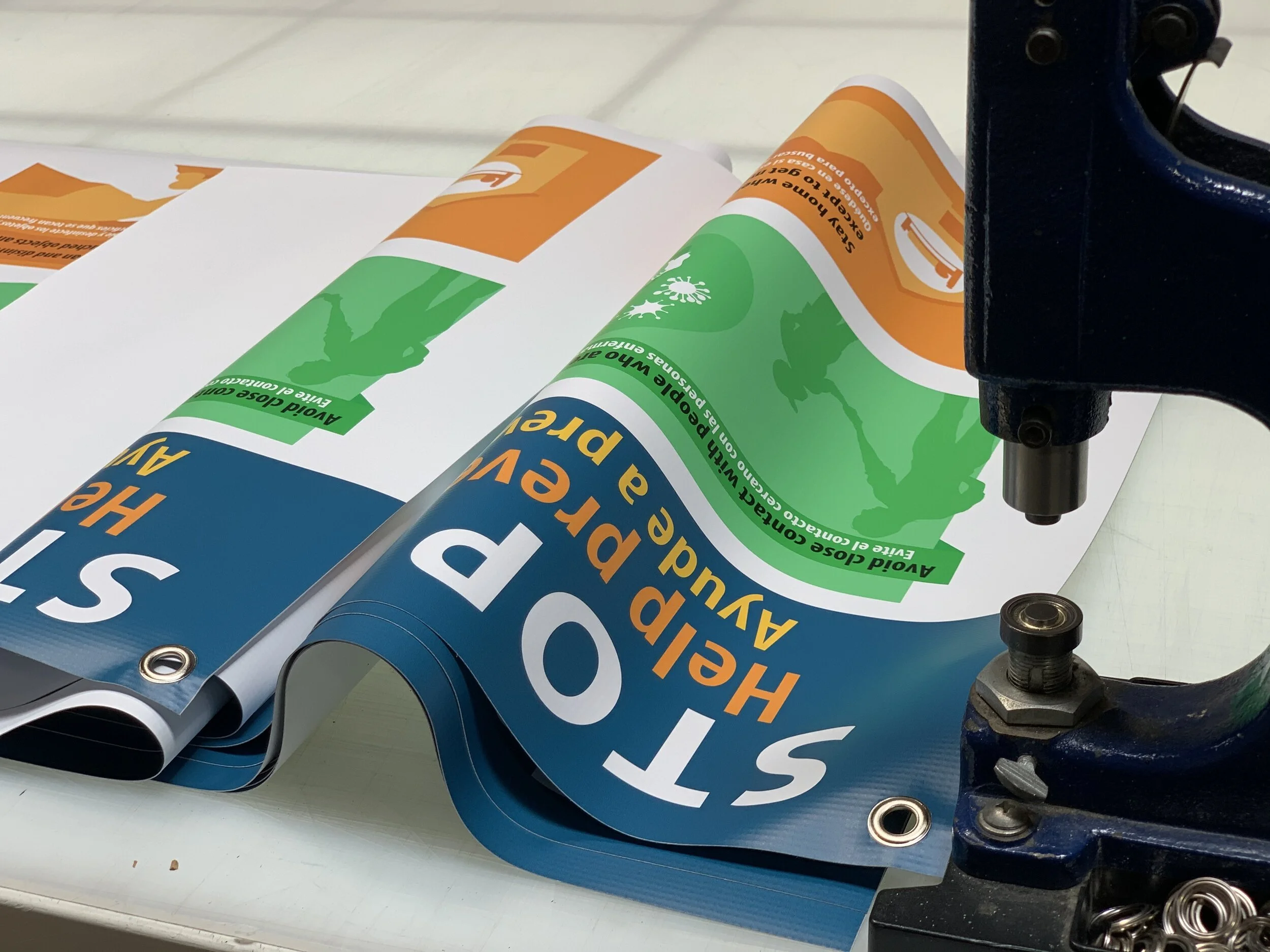
Roll materials are flexible materials that are stored and fed through large-format printers or other sign-making equipment on a continuous roll.
Common examples include:
Vinyl
Banner material
Paper
Flexible films
Because these materials are flexible, they can be used for everything from temporary promotional banners to vehicle graphics and window decals.
Vinyl

Vinyl is one of the most versatile materials in the sign industry.
Depending on the type of vinyl, it can be used for:
Vehicle graphics
Window graphics
Stickers and decals
Wall graphics
Labels
Sign lettering
Promotional graphics
Vinyl can be printed with custom graphics or cut into specific shapes and lettering.
It is available in different grades and finishes depending on the application. For example, a graphic intended for a vehicle may require a different vinyl than a temporary indoor wall graphic.
Best for: Graphics, decals, vehicle branding, windows, walls, and applications where flexibility is important.
Banner Material
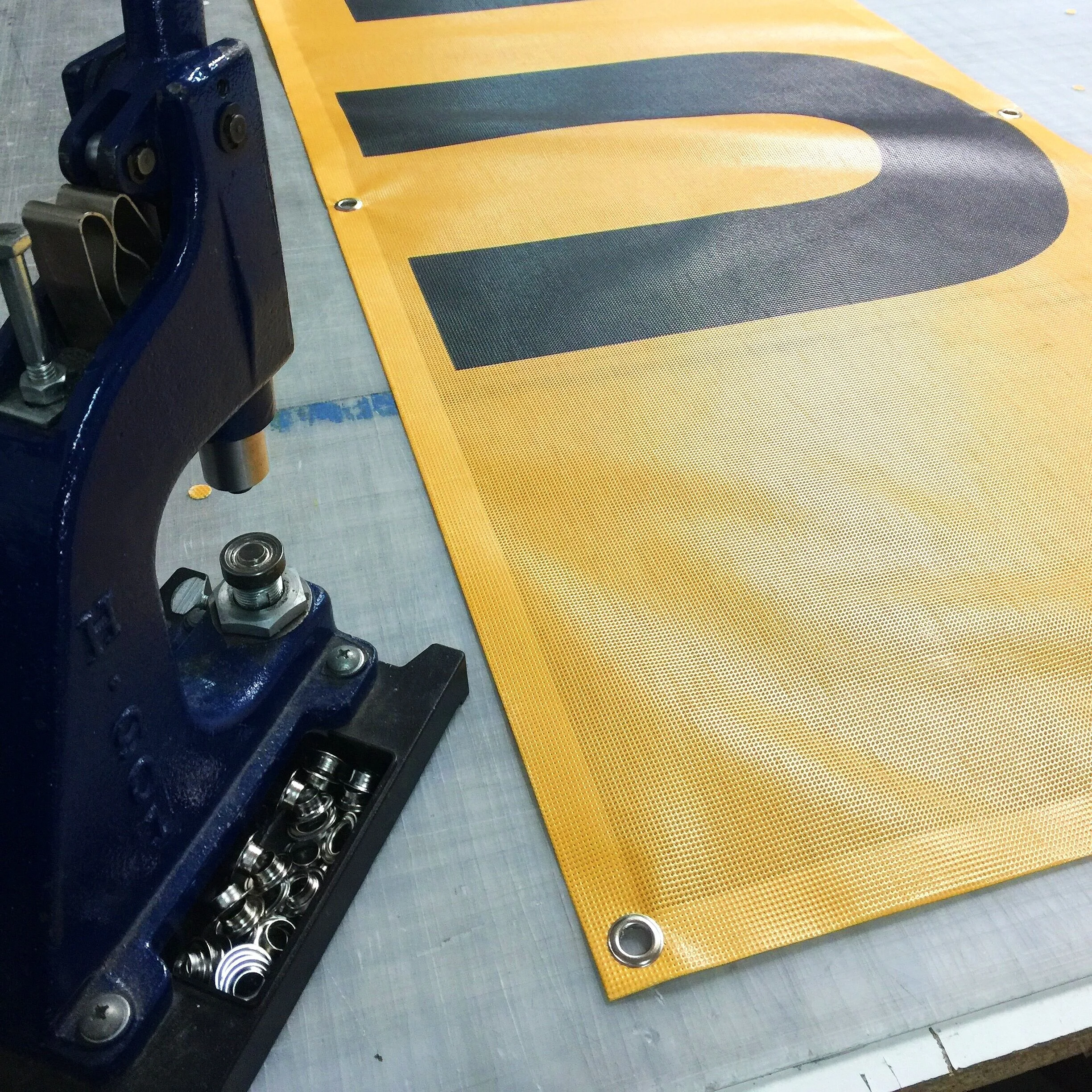
Banners are another common roll material. They are flexible, lightweight, and easy to transport and install.
Vinyl banners can be used for:
Grand openings
School events
Fundraisers
Sales and promotions
Construction projects
Community events
Temporary business signage
Banners are particularly useful when you need a large, highly visible sign without the cost or permanence of a rigid sign.
Best for: Events, promotions, temporary signage, and large-format messaging.
For more information, see our guide to vinyl banners and how businesses use them for advertising and events.
Paper
Paper is another type of roll or flexible print material used for certain indoor applications.
While paper generally isn't appropriate for permanent outdoor signage, it can be useful for short-term indoor displays, posters, or printed materials where durability isn't the primary concern.
Best for: Short-term indoor displays and applications where low cost is more important than weather resistance.
What Are Rigid Sign Materials?
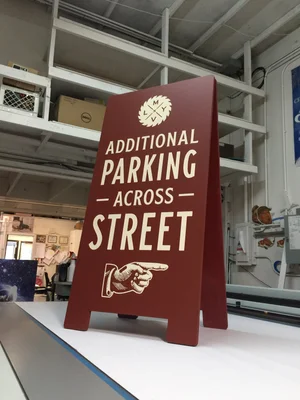
Rigid materials are solid sheets, boards, or panels that maintain their shape without needing to be stretched or supported.
Common rigid sign materials include:
Wood
Metal
Plastic
Foam
Composite materials
Other specialty boards
Rigid materials are often selected when a sign needs to have structure, durability, or a more substantial appearance.
Wood Signs
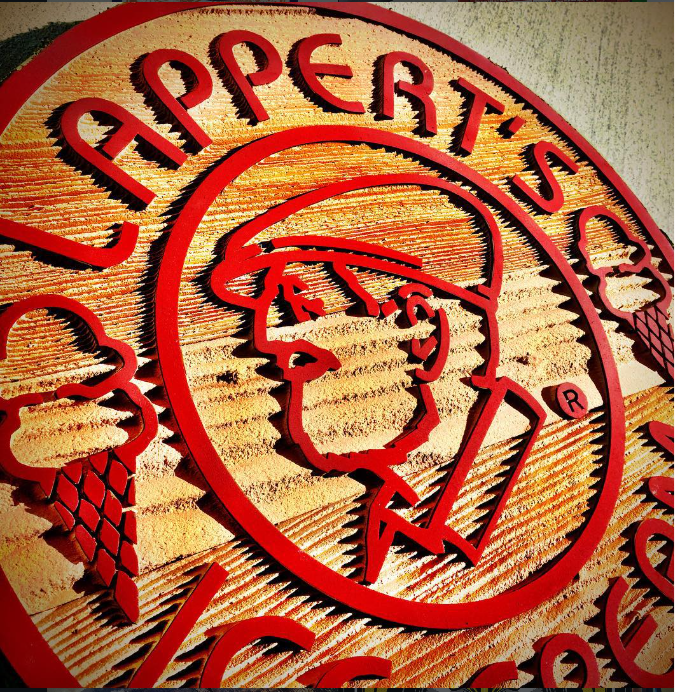
Wood can give a sign a warm, natural, or traditional appearance.
It is commonly used for:
Architectural signs
Restaurants
Wineries
Farms
Boutique businesses
Directional signs
Decorative signage
Different types of wood and finishing techniques can create very different appearances. For example, a sandblasted redwood sign can have a classic, handcrafted look.
Wood can be particularly appropriate when the sign needs to complement a natural or historic setting.
Best for: Architectural, traditional, rustic, and decorative signage.
Metal Signs

Metal is one of the most common choices for durable signage.
Aluminum is especially popular because it is lightweight, strong, and resistant to corrosion.
Metal signage can be used for:
Parking signs
Directional signs
Building signs
Business signs
Safety signs
Dimensional signs
Exterior signage
Metal can also be fabricated into dimensional letters and other custom shapes.
Best for: Durable outdoor signage, parking and directional signs, architectural signage, and applications requiring a long service life.
Plastic Sign Materials

Plastic encompasses several different materials used throughout the sign industry.
Depending on the specific plastic, these materials can be lightweight, durable, economical, or easy to fabricate.
Plastic signs are commonly used for:
Interior signs
Directional signs
Room identification
Displays
Promotional signage
Dimensional lettering
The right plastic depends on where the sign will be installed and how it will be used.
Best for: Indoor signage, dimensional graphics, displays, and applications where lightweight construction is useful.
Foam Sign Materials
Foam board is a lightweight rigid material that can be used for indoor signs, displays, presentations, and temporary applications.
Because foam is relatively light, it can be easier to transport and mount than heavier materials.
It can work well for:
Indoor displays
Presentations
Events
Trade shows
Temporary signage
Promotional graphics
Best for: Lightweight indoor and temporary signage.
Composite & Eco-Friendly Materials
There are also specialty materials that don't fit neatly into the basic categories.
Composite materials combine different materials to create a panel with particular characteristics such as strength, light weight, or weather resistance.
Some projects may also call for eco-conscious materials made with recycled or renewable components. The best choice depends on the project's environmental goals, intended lifespan, and performance requirements.
Best for: Projects with specific durability, design, weight, or sustainability requirements.
Roll vs. Rigid: What's the Difference?
The simplest distinction is:
Roll materials are flexible. Rigid materials are solid and hold their shape.
Roll MaterialsRigid MaterialsVinylWoodBanner materialMetalPaperPlasticFlexible filmsFoamEasy to roll and transportMaintain their shapeGreat for graphics and flexible applicationsGreat for structural and permanent signsOften ideal for temporary or applied graphicsOften ideal for durable or architectural signage
Neither category is inherently better. The right choice depends on what you need the sign to accomplish.
How Do You Choose the Right Sign Material?
Before choosing a material, ask a few basic questions.
1. Will the sign be indoors or outdoors?
Outdoor signs need to withstand conditions such as sunlight, rain, wind, and temperature changes.
A material that works perfectly well indoors may not be appropriate for long-term outdoor use.
2. How long does the sign need to last?
A sign for a one-day event has very different requirements from a storefront sign that needs to look good for years.
Consider whether you're creating:
Temporary signage → banners, posters, lightweight materials
Long-term signage → metal, dimensional materials, durable vinyl, architectural signs
3. Where will people see it?
Think about the environment and viewing distance.
A large exterior sign viewed from across a parking lot has different requirements from a small room-identification sign viewed from a few feet away.
The material, size, lettering, and graphics should all work together.
4. Does the sign need to be flexible?
If the graphic needs to wrap around a vehicle, adhere to a window, or conform to another curved surface, a flexible material such as vinyl may be the appropriate choice.
If the sign needs to stand independently or maintain a specific shape, a rigid material may be better.
5. What kind of appearance do you want?
Materials contribute to the character of a sign.
Wood can feel warm and traditional.
Metal can feel modern and durable.
Acrylic or plastic can create a clean, contemporary appearance.
Vinyl provides enormous flexibility for colors, graphics, lettering, and branding.
The material should complement the identity of the business or organization.
6. What's the budget?
Material is only one part of the total cost of a sign. Size, design, fabrication, mounting, installation, lighting, and other factors can also affect the final price.
Rather than simply choosing the least expensive material, consider the total value over the life of the sign.
A slightly more durable material may make more sense for a sign that will be exposed to the elements for years.
You Don't Have to Choose the Material Yourself
One of the benefits of working with an experienced sign company is that you don't have to become a sign-material expert before starting your project.
Tell us:
What the sign is for
Where it will be installed
How long you need it to last
What you want it to look like
Your approximate budget
From there, Davis Sign Co. can recommend materials and production methods that make sense for the project.
From Flexible Graphics to Durable Signs
There is no single "best" sign material. The right choice depends on the location, purpose, lifespan, appearance, and budget of your project.
From vinyl vehicle graphics and promotional banners to aluminum parking signs, dimensional lettering, wood signs, and custom rigid panels, Davis Sign Co. works with a wide range of materials to create signage for businesses, schools, contractors, organizations, and other local clients throughout the Bay Area.
Not sure what material your project needs? Contact Davis Sign Co. and let us help you find the right combination of material, design, and production method for your sign.